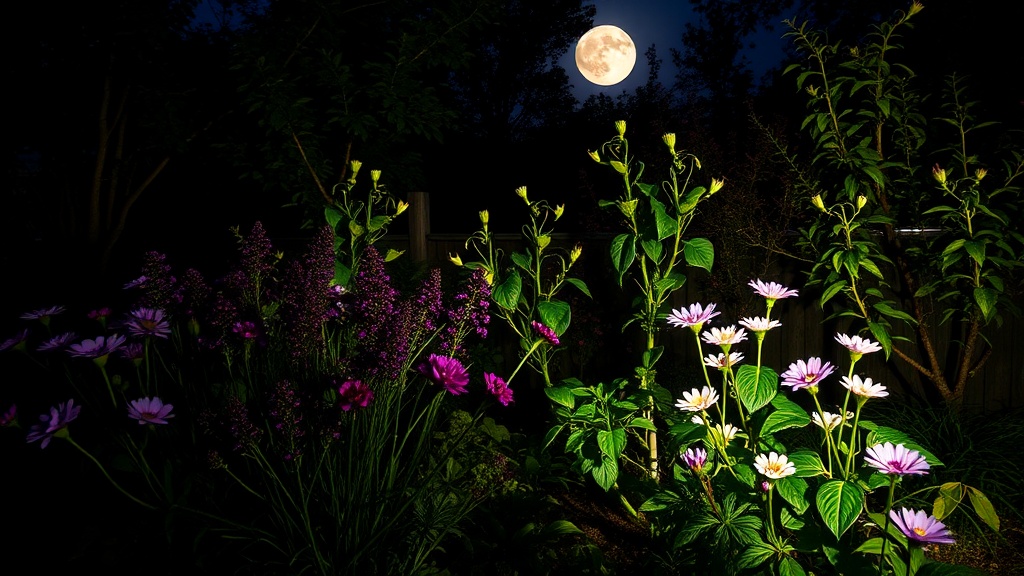
Creating a Moonlight Garden with Night-Blooming Plants

Have you ever wondered why your garden feels completely different once the sun goes down? A moonlight garden uses plants with white flowers, silvery foliage, and strong scents to create a visual experience that thrives after dark. This guide explains how to select the right plants, design your space for visibility, and use light to make your nighttime outdoor area functional and beautiful.
What are the best plants for a moonlight garden?
The best plants for a moonlight garden are those with white or pale blooms and reflective foliage. While most gardens focus on bright colors for daytime pollinators, a moonlight garden relies on light-colored flowers to catch the moon's rays. You want varieties that open in the evening or have high-contrast textures.
White flowers act like natural reflectors. If you plant Nicotiana (flowering tobacco), the scent becomes much more intense at night. This is a great way to attract nocturnal pollinators like moths.
Consider these plant categories for your design:
- White Blooms: Jasmine, Moonflowers (Ipomoea alba), and White Lilies.
- Silver Foliage: Lamb's Ear (Stachys byzantina), Artemisia, and Dusty Miller. These leaves catch even the smallest amount of light.
- Scented Varieties: Evening Primrose and Gardenias. These provide the olfactory layer of your garden.
- Texture: Ornamental grasses like Blue Fescue add movement and shadow play when the wind blows.
If you are working with smaller containers, you might want to look into moon garden concepts to see how different textures interact. Don't forget that even a small patio can hold a few white-flowering perennials to change the vibe of your seating area.
One thing to keep in mind is that many of these plants thrive in different light conditions than your standard summer perennials. For instance, many white-flowering plants actually prefer slightly more shade or protection from the harsh midday sun. It's a smart way to use the areas of your yard that usually get too much heat.
How do I light a garden for nighttime use?
You should use low-voltage LED lighting and indirect light sources to illuminate your plants without washing out their natural colors. The goal isn't to turn your backyard into a stadium; it's to create soft, ambient glows that highlight specific textures. Directing light upward into the canopy of a tree or the underside of a large leaf creates a much more dramatic effect than a bright floodlight.
I've found that "uplighting" works best for structural plants. If you have a Japanese Maple or a large shrub, a small spotlight at the base makes a huge difference.
Here are a few ways to approach lighting:
- Path Lights: Use low-profile solar or low-voltage lights to define edges.
- Moonlighting: Place lights high up in trees, pointing downward to mimic the soft light of a full moon.
- Accent Lighting: Use small spotlights to highlight a specific white bloom or a silvery leaf texture.
- Ambient Glow: String lights (like those from Philips Hue or Ring) can provide a soft wash of light over a seating area.
If you're already working on your outdoor layout, you might find that lighting can enhance your backyard patio layout by adding depth. A well-placed light can make a small space feel much larger at night. Just don't overdo it—too much light actually ruins the "moonlight" effect by killing the shadows that create the mystery.
The catch? If you use too much bright, white light, you'll lose the subtle silver tones of your plants. Stick to warmer or very soft, dimmable options. It's a delicate balance.
Which plants smell best at night?
Plants that release scent at night are typically those that are pollinated by moths or nocturnal insects. These plants often have highly fragrant blossoms that peak in the evening hours. If you want a garden that smells as good as it looks, prioritize species like Jasmine, Evening Primrose, or certain varieties of Gardenia.
Scented plants are a game-changer for sensory gardening. You don't even have to be standing right next to them to enjoy them. A light breeze can carry the aroma across your entire yard.
I've noticed that scent is often tied to the temperature. On a warm, humid night, the scent of Jasmine can be incredibly powerful. On a cooler night, you might need more robust scents like Lavender or even certain types of Mint near your seating area.
It's worth noting that if you have allergies, you should check the pollen types. Many night-blooming plants are heavy on scent but don't necessarily have heavy, irritating pollen.
| Plant Name | Primary Scent Type | Best Placement |
|---|---|---|
| Moonflower | Sweet/Floral | Climbing on a trellis |
| Night-Blooming Jasmine | Intense/Spicy | Near windows or paths |
| Evening Primrose | Mild/Earthy | Ground level/Edges |
| Gardenia | Heavy Floral | In a container near a seat |
When choosing where to plant these, think about the airflow. If you plant a highly scented plant in a corner with no wind, the scent stays trapped. If you put it in an open area, the scent travels.
Does a moonlight garden require more maintenance?
A moonlight garden does not necessarily require more maintenance than a standard garden, but it does require more intentionality regarding light and placement. Most of the plants used—like certain perennials and shrubs—are quite hardy. The real "work" is in the design phase and the upkeep of the lighting systems.
You'll need to keep your light fixtures clean. Dust or bird droppings on a small LED spotlight can significantly reduce the effectiveness of your lighting. A quick wipe with a damp cloth once a month keeps things looking sharp.
Also, keep an eye on your "moonlight" plants during the day. Because many of them have silvery or light-colored leaves, they can sometimes be more sensitive to intense, direct sun if they aren't established. If you're in a high-heat area like parts of the Midwest, you might need to provide a bit of afternoon shade.
One tip for the budget-conscious: don't feel like you need to buy expensive, high-end professional lighting right away. A few high-quality solar path lights can do wonders while you're testing out your design.
If you enjoy working with your hands and want to grow your own scents, you might enjoy building a vertical herb garden. Herbs like mint or chamomile are great for adding scent and can be easily integrated into a nighttime garden design.
The most important part of maintenance is observing how the light moves. As the seasons change and the sun's angle shifts, your shadows will change. You might find that a spot that looks great in June looks completely different in August. Adjust your plants or your lights accordingly.