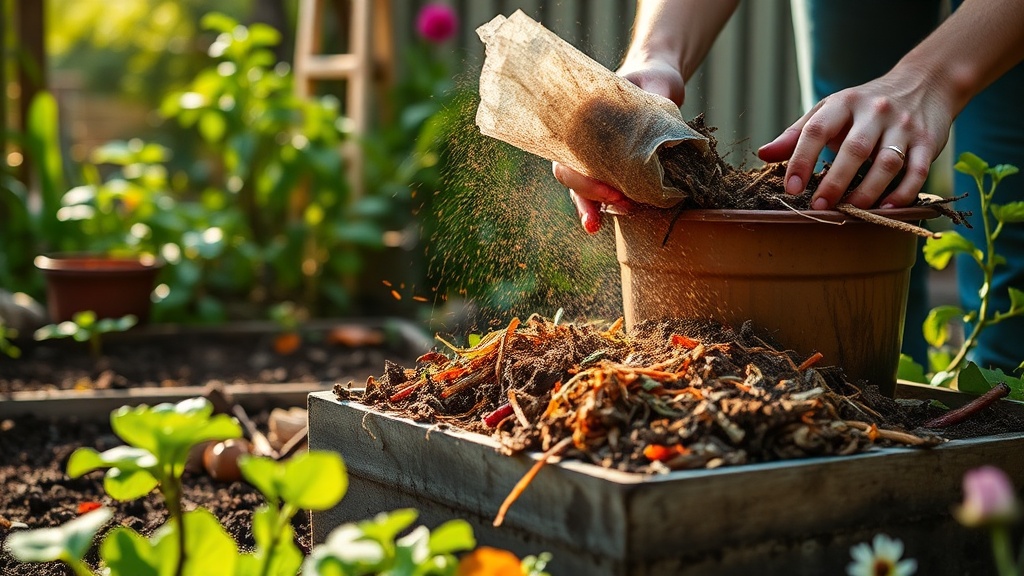
Making Garden Gold: A Practical Guide to Simple Home Composting

What Exactly Is Composting, and Why Bother?
You’re about to learn how to transform common organic waste from your kitchen and yard into a rich, nutrient-dense soil amendment—compost. This process isn't just about reducing what you send to the landfill; it’s a powerful, straightforward way to improve your garden's health, conserve water, and cultivate thriving plants. We'll demystify the composting process, showing you how to get started, what to include, and how to avoid common missteps, so you can start benefiting from this sustainable practice right away.
At its core, composting is nature’s recycling system. It’s the controlled decomposition of organic materials by microorganisms under aerobic (oxygen-rich) conditions. These tiny workers—bacteria, fungi, and other decomposers—break down everything from fallen leaves to vegetable peelings, converting them into a stable, dark, earthy material. This “garden gold” acts as a powerful soil conditioner, rather than just a fertilizer, offering a host of advantages for any gardener or homeowner.
The benefits extend well beyond just improving your soil. Incorporating compost can significantly enhance your garden's water retention capabilities, meaning you'll water less frequently—a real advantage during dry spells. It also introduces beneficial microbes that help suppress plant diseases and can reduce your reliance on synthetic fertilizers by providing a slow-release source of essential nutrients. Moreover, diverting food scraps and yard waste from the trash can noticeably shrink your household’s carbon footprint, a small but meaningful step toward environmental responsibility. It's a simple feedback loop: healthy soil grows healthy plants, and healthy plants make a more resilient garden.
What Can Go in My Compost Pile – And What Should Stay Out?
Understanding what materials to add to your compost pile, and what to absolutely avoid, is key to success. Composting relies on balancing two main types of ingredients: ‘greens’ (rich in nitrogen) and ‘browns’ (rich in carbon). Think of it like a recipe where getting the proportions roughly right leads to the best outcome. An ideal ratio is typically about 2-3 parts browns to 1 part greens, though don't get too hung up on precision when starting out.
The Good Stuff: Greens and Browns for a Thriving Pile
- Greens (Nitrogen-Rich): These provide the protein for your microbial workers, helping them multiply and heat up the pile.
- Vegetable and fruit scraps (peels, cores, wilted produce)
- Coffee grounds and tea bags (paper filters are fine)
- Fresh grass clippings
- Green plant trimmings from the garden (non-diseased)
- Eggshells (crush them for faster breakdown)
- Browns (Carbon-Rich): These are the energy source and provide structure, ensuring good airflow. Without enough browns, your pile can become slimy and smelly.
- Dry leaves
- Shredded newspaper or plain cardboard (remove tape and labels)
- Sawdust or wood chips (in moderation, can be slow to break down)
- Straw or hay
- Twigs and small branches (chopped into small pieces)
What to Avoid: Keeping Your Compost Pile Healthy and Odor-Free
Certain items should never find their way into your compost, primarily because they can attract pests, create foul odors, or introduce pathogens. This list is just as important as knowing what to include:
- Meat, bones, and fish: Attract rodents and other pests, can create strong odors, and decompose slowly.
- Dairy products: Also attract pests and cause odors.
- Fats, oils, and grease: Slow decomposition, create odors, and attract pests.
- Diseased or insect-infested plants: Pathogens and pests can survive the composting process and spread to your garden when you use the finished compost.
- Pet waste (dog or cat feces): Contains harmful bacteria and parasites.
- Weeds that have gone to seed: The seeds can survive and sprout in your garden later.
- Chemically treated wood or sawdust: Can contain harmful chemicals.
- Black walnut leaves: Contain juglone, a natural herbicide that can inhibit the growth of other plants.
A good rule of thumb: if it’s a plant-based material that hasn’t been cooked with oils or meat, it’s probably safe for your compost pile. For a comprehensive list of what can and cannot be composted, the