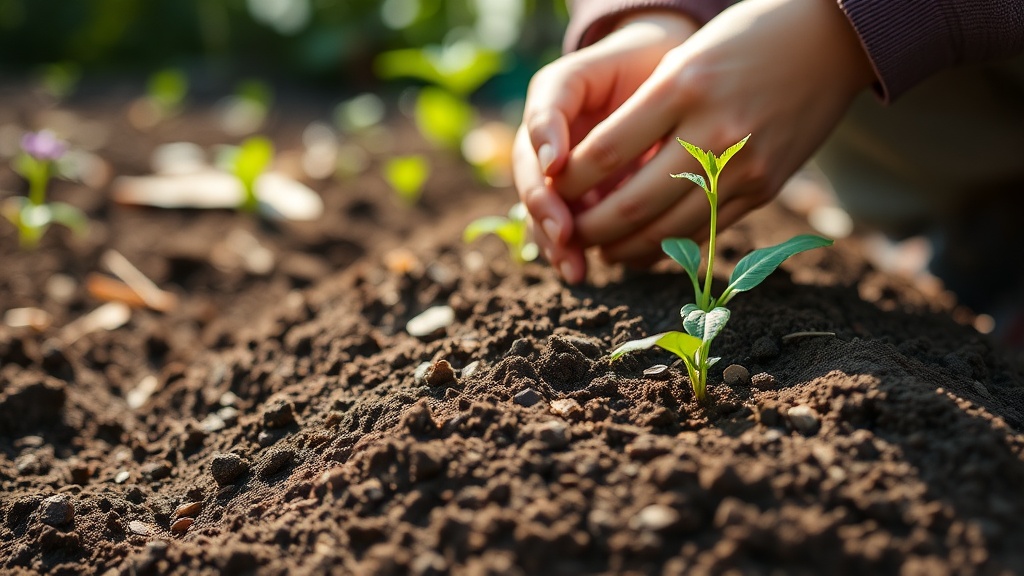
Building Living Soil: A Practical Guide to Natural Garden Fertility

You step outside after a long winter, coffee in hand, ready to plant your first tomatoes of the season. The soil looks dark and promising—but is it actually alive? Most gardeners focus on what goes above ground: the blooms, the vegetables, the tidy rows of green. Yet the real magic—the invisible work that determines whether your plants thrive or merely survive—happens beneath the surface in a bustling microscopic ecosystem most of us never consider. Living soil isn't just dirt with nutrients added. It's a complex community of bacteria, fungi, nematodes, and countless other organisms working in concert to feed your plants naturally. When you build soil that teems with life, you're not just growing better vegetables and flowers—you're creating a self-sustaining system that requires fewer inputs, shows greater resilience during weather extremes, and produces food with measurably higher nutrient density. This guide will walk you through understanding what makes soil truly "living" and how you can cultivate that biological richness in your own backyard—whether you're working with a few containers on a balcony or managing a quarter-acre plot.
What Makes Soil "Living" Instead of Just Dead Dirt?
Traditional gardening advice often treats soil like an inert growing medium—something to hold roots in place while you periodically dump fertilizer on top. That approach misses the point entirely. A spoonful of healthy living soil contains more microorganisms than there are people on Earth. These tiny creatures form intricate food webs that cycle nutrients, suppress disease, improve soil structure, and even communicate chemically with plant roots.
The foundation of this ecosystem is organic matter—decomposed leaves, plant residues, root exudates, and the bodies of dead microorganisms. As organic matter breaks down, it becomes humus: a stable, dark substance that gives fertile soil its characteristic color and earthy smell. Humus acts like a sponge, holding water and nutrients that would otherwise leach away. But more importantly, it provides habitat and food for the soil food web.
Beneficial fungi called mycorrhizae form symbiotic relationships with plant roots, extending their reach far beyond what the roots could access alone. These fungal networks can stretch for meters through the soil, bringing water and minerals back to the plant in exchange for sugars. Meanwhile, bacteria fix nitrogen from the air, solubilize phosphorus from mineral particles, and produce compounds that stimulate plant growth. Predatory nematodes and protozoa consume other microbes, releasing nutrients in forms plants can absorb. Earthworms tunnel through the ground, creating channels for air and water while depositing nutrient-rich castings. When this system functions well, plants don't need bottled fertilizers—they're fed continuously by the biological activity around their roots.
How Do You Start Building Living Soil from Scratch?
If you're beginning with subsoil, construction fill, or soil that's been chemically dependent for years, building biology takes time—but it's absolutely achievable. The first step is adding organic matter, and lots of it. Compost is the obvious choice, but don't stop there. Shredded leaves, aged wood chips, straw (not hay, which contains weed seeds), and well-rotted manure all feed different segments of the soil food web. Diversity matters more than perfection.
Spread a minimum two-inch layer of organic material over your beds each year. Don't till it in aggressively—that disrupts fungal networks and releases stored carbon. Instead, let earthworms and other soil organisms do the incorporation work for you. Cover the organic layer with mulch (wood chips, straw, or living ground covers) to protect it from erosion and temperature extremes while maintaining the moist conditions decomposers prefer.
Consider planting cover crops during off-seasons. Legumes like clover and vetch pull nitrogen from the atmosphere and store it in root nodules. When you cut them down before they set seed—leaving the roots in place and using the tops as mulch—you've just added both organic matter and nitrogen without opening a fertilizer bag. Deep-rooted crops like daikon radish and chicory break up compacted layers and pull nutrients from depths shallow-rooted vegetables can't reach. When these roots decompose, they leave channels for air and water while depositing those mined minerals near the surface.
According to research from the USDA Natural Resources Conservation Service, increasing soil organic matter by just 1% can help soil hold 20,000 more gallons of water per acre—transforming how your garden weathers dry spells. That organic matter increase happens gradually, but every addition moves you in the right direction.
Why Should You Avoid Synthetic Fertilizers When Building Soil Biology?
Salt-based synthetic fertilizers deliver nutrients in forms plants can absorb immediately—but they do so at a cost to the living systems in your soil. High concentrations of soluble nitrogen and potassium actually dehydrate soil microbes, pulling water out of their cells through osmosis. Repeated applications shift the microbial community toward bacteria-dominated systems that cycle nutrients rapidly but lack the fungal networks that support long-term soil structure and perennial plant health.
Perhaps more importantly, synthetic fertilizers create dependency. When plants receive a constant stream of easily accessible nutrients, they stop exuding the sugary compounds that feed mycorrhizal fungi. The fungal connections wither, and plants lose their extended root networks. They become like children who never learned to cook because takeout was always available—unable to forage for themselves when conditions change.
Instead of bottles and bags, focus on feeding the soil rather than the plant. Apply finished compost as a side-dressing during the growing season. Brew compost tea—actively aerated compost steeped in water to extract beneficial microbes—and spray it on leaves or drench the soil around plants. Use fish emulsion and seaweed extracts that provide nutrients in organic forms requiring biological processing. These approaches release nutrition gradually, match natural cycles more closely, and support rather than suppress the organisms you're trying to cultivate.
What Simple Tests Reveal Whether Your Soil Is Coming Alive?
You don't need a PhD in soil science to gauge biological activity—your senses and simple observations tell you plenty. Healthy living soil smells sweet and earthy, like a forest floor after rain. That distinctive aroma comes from geosmin, a compound produced by active Actinobacteria. If your soil smells sour, putrid, or like rotten eggs, something's wrong—likely anaerobic conditions from compaction or poor drainage.
Visual inspections reveal even more. Dig a square-foot section about six inches deep and count earthworms. Finding ten or more in healthy conditions indicates good biological activity. Fewer than three suggests your soil needs more organic matter and reduced disturbance. Look for visible fungal threads—white or yellowish filaments running through decomposing material. Notice whether soil crumbles easily (good structure) or clumps into hard masses (compaction and low organic matter).
The Soil Moisture Equipment Corporation and university extension services offer simple qualitative assessments you can perform at home without sending samples to labs. Squeeze a handful of moist soil—if it holds together but crumbles when poked, you've got good aggregation created by glomalin (a glue-like substance fungal hyphae produce). Watch how quickly water infiltrates: living soil with good structure absorbs rainfall rather than shedding it.
For quantitative data, commercial soil biology tests from services like Ward Laboratories measure microbial biomass, fungal-to-bacterial ratios, and active carbon levels. These provide baselines for tracking improvement over time. But don't let perfect be the enemy of good—regular addition of diverse organic matter and elimination of biocides (synthetic pesticides and fungicides) will move almost any soil toward greater biological health.
Feeding Schedule for Living Soil Gardens
Establishing rhythms helps maintain momentum once you've begun the transition. Early spring—before planting—spread a half-inch of finished compost across beds. In summer, side-dress heavy feeders like tomatoes and squash with compost or apply compost tea every three to four weeks. Fall represents the most important window: this is when you apply the bulk of annual amendments, giving decomposers months of cool, moist conditions to process materials before spring planting.
Mulch continuously. Bare soil is wounded soil—exposed to temperature extremes, erosion, and carbon loss. Maintain two to four inches of organic mulch year-round, replenishing as decomposition thins the layer. In perennial beds, use wood chips or shredded bark. In vegetable rotations, straw or chopped leaves work well and break down faster.
Minimize disturbance. No-till gardening isn't just a trendy technique—it's fundamental to preserving fungal networks and soil structure. When you need to transplant, dig only as deep and wide as necessary. Use broadforks or garden forks to aerify compacted areas rather than turning soil over. The less you disrupt the habitat you've built, the faster biodiversity rebounds.
"The nation that destroys its soil destroys itself." — Franklin D. Roosevelt
Building living soil isn't a weekend project—it's a relationship you develop with a place. Some gardens respond quickly to improved practices, showing visible changes within a single season. Others, particularly those with years of chemical dependency or severe compaction, may take two or three years to hit their stride. The patience pays dividends. Gardeners who commit to biological methods often report that their sixth and seventh growing seasons prove remarkably easier than their first and second. The soil begins working for them rather than requiring constant intervention. Water needs drop. Pest problems diminish as predator populations establish. Plants show greater vigor and disease resistance. You spend less money on amendments and less time battling problems while harvesting more nutritious food. The underground ecosystem you've cultivated becomes your most reliable gardening partner—quietly working around the clock so you don't have to.