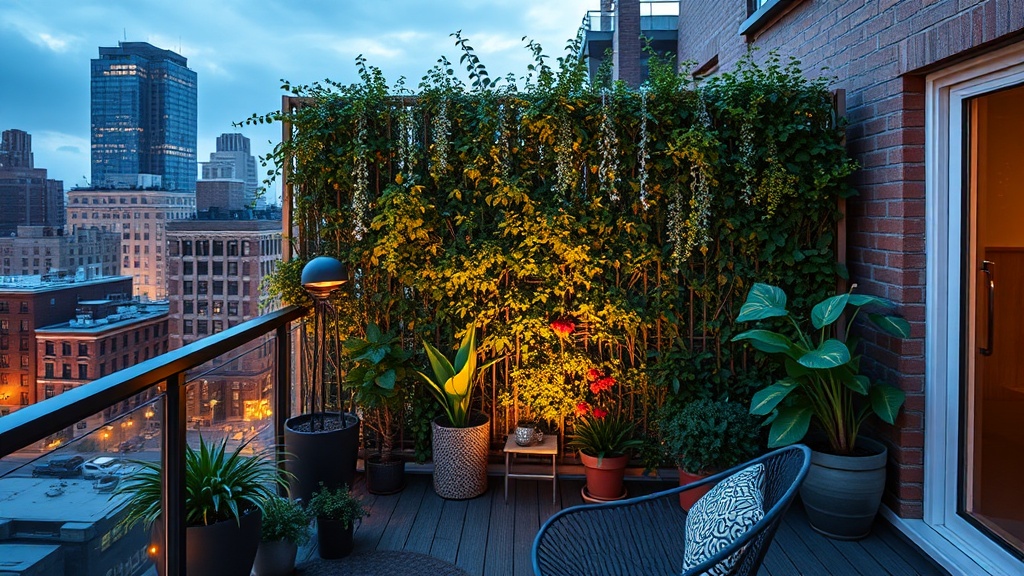
Build a Living Privacy Screen on a City Balcony

The chair by the balcony door gets morning sun, the railing faces a brick wall, and by July the whole corner feels hotter than the apartment kitchen. A living privacy screen can solve more than one problem at once: it softens the view, cools a hard surface, filters wind, and gives climbing plants a job they actually want to do. The trick is building it like a small outdoor system, not like a decoration. You need the right support, the right container, a plant that matches your light, and a watering plan that holds up on busy weeks.
What kind of balcony can support a plant screen?
Start by reading the balcony like a site, because a screen adds weight, height, and wind resistance. Stand outside in the morning, midday, and late afternoon. Count the hours of direct sun. Notice where gusts hit hardest. Look at the railing style, the wall material, the floor surface, and the path water takes after rain. If your balcony has a glass rail, heat may bounce back onto leaves. If it has open metal rails, wind can dry containers fast. If it is covered, plants may miss natural rain and depend fully on you.
Then check building rules. Many apartments and condos restrict anything attached to railings, anything hanging outward, or anything visible from the street. That does not end the project; it just changes the build. A freestanding trellis inside a heavy planter is often easier to approve than a panel tied to the railing. Keep every part inside the balcony edge. Avoid tall, sail-like panels in windy spots. A plant screen should feel calm in bad weather, not like it is asking to be removed during the first storm.
What container should you use for a balcony trellis?
The container is the anchor. A narrow decorative pot may look right on day one, but it can tip, dry out, and cramp the roots before the vines have covered half the support. Choose a rectangular planter at least 16 inches deep for most annual vines and deeper for woody perennials. Wider is better when wind is part of the site. Lightweight resin, fiberglass, or fiberstone-style planters keep the load manageable, but they still need enough soil volume to hold water and resist tipping.
Drainage matters. Use a planter with holes and a tray that catches runoff without leaving roots sitting in water. If you are worried about stains, lift the planter slightly on pot feet so the floor can dry underneath. Fill it with a container potting mix, not garden soil. Garden soil compacts in pots and can suffocate roots. For a useful baseline on container growing, the University of Minnesota Extension container gardening guide explains why potting media, drainage, and watering frequency all change once plants move into containers.
What plants work best for a living balcony screen?
Pick the plant after you know the light. Full sun balconies can handle fast annual climbers like black-eyed Susan vine, morning glory where it is allowed, hyacinth bean, scarlet runner bean, climbing nasturtium, and compact cucumbers. For fragrance and flowers, mandevilla and jasmine can work in warm conditions if you can meet their water needs. Partial sun is better for climbing nasturtium, clematis in a large pot, climbing hydrangea in a very patient long-term setup, or annual vines grown more for foliage than heavy bloom. Shade screens are slower, but you can still work with climbing hydrangea, ivy where it is not invasive, or a trellis paired with tall shade-tolerant container plants.
Before choosing perennials, check winter reality. A plant that survives in the ground may fail in a container because roots are more exposed to cold. The USDA Plant Hardiness Zone Map helps you identify your zone, but containers often need a tougher rating than in-ground plantings. If you rent or expect to move, annual vines may be the better call. They grow fast, give you coverage in one season, and leave fewer commitments when the lease changes.
How do you build the support without drilling?
Use a freestanding system when you can. Set a trellis, obelisk, cattle panel section, bamboo grid, or modular garden screen inside the planter before adding all the soil. Bury the legs deep enough that the soil helps brace the frame. For extra stability, place heavy stones or bricks at the bottom around the trellis feet, then add potting mix. The support should reach high enough to create privacy while staying below any building limit. In exposed spots, shorter and wider beats tall and narrow.
- Place the empty planter exactly where it will live, because it will be much harder to move when full.
- Set the trellis inside the planter and test for wobble.
- Add clean weight around the base if the support shifts.
- Fill with moistened potting mix, pressing gently around the trellis legs.
- Plant vines near the support, not at the far edge of the pot.
- Water deeply, then tie new stems loosely as they start climbing.
Soft ties are better than wire. Use garden twine, Velcro plant tape, cotton strips, or clips that allow stems to thicken. Tie the plant to the support, not the support to the railing unless your building allows it. If you do use railing ties, use removable ties and check them often so they do not rub paint, trap moisture, or create noise in wind.
How do you plant it so the screen fills in evenly?
Do not overplant. Three small vines in one planter can look thin at first, but they may be plenty once roots expand and stems start racing upward. Crowding gives you quick coverage for two weeks, then stress for two months. Space plants according to the tag, and think about airflow. Leaves packed too tightly invite mildew, mites, and weak growth. If you want instant softness while vines grow, add a few trailing annuals at the front edge, such as bacopa, calibrachoa, sweet potato vine, or trailing nasturtium.
Train early and often. Young stems are flexible. Guide them horizontally as well as vertically so the screen fills the width instead of shooting straight to the top. Pinch some annual vines lightly to encourage branching. Remove weak stems that tangle into the center. A screen is not a hedge; it is a woven structure made of living growth. Ten minutes of training each week does more than one aggressive cleanup after everything knots together.
How do you keep a balcony screen watered in summer?
A leafy screen drinks more than a single pot of herbs. Wind pulls moisture from the leaves, sun heats the container, and a mature vine can drain a planter surprisingly fast. Water deeply until excess drains, then let the top inch or two of mix dry before watering again. In hot spells, that may mean daily water. If you travel or work long days, add mulch on top of the soil, choose a larger planter, or use a self-watering container with an overflow point.
Feeding should be steady, not heavy. Mix a slow-release fertilizer into the potting mix at planting time, then use a diluted liquid feed during active growth if leaves pale or flowering slows. Fruiting vines like cucumbers and runner beans need more nutrition than ornamental vines. Follow the label. Too much fertilizer can push soft growth that wilts fast and attracts pests. Penn State Extension has a clear overview of container gardening basics that is useful when you are balancing water, fertilizer, and soil volume in small spaces.
What can go wrong, and how do you fix it fast?
If the whole screen leans, reduce height or add weight before the next storm. Do not wait. If leaves yellow from the bottom up, check whether the planter is staying wet or running out of nutrition. If leaf edges crisp, the plant may be getting too much heat and wind for the container size. Move the planter a few inches back from the rail if possible, mulch the soil, and water earlier in the day. If flowers drop without fruit, heat stress or inconsistent water may be the reason.
Pests usually show up on stressed plants first. Look under leaves for aphids, whiteflies, spider mites, and sticky residue. Rinse small outbreaks with water and prune the worst stems. Use insecticidal soap only according to the label, and avoid spraying open flowers when pollinators are active. For mildew, improve airflow by thinning crowded growth and watering the soil instead of the leaves. A screen that gets a little attention every few days is much easier to keep clean than one you only inspect when it looks tired from the couch.
How do you close the season without making a mess?
Annual vines can be cut at the base after frost or once they decline. Let the top growth dry slightly, then unwind it from the trellis in sections. Empty spent roots and refresh the potting mix with compost before replanting, or store the planter dry if winter weather is harsh. Perennial vines need a different plan. Move the container into a protected corner, wrap the pot if freeze-thaw cycles are rough, and water occasionally when the soil is dry and not frozen. Do not fertilize late in the season when the plant should be slowing down.
For next year, keep the trellis if it stayed stable and the scale felt right. Change the plant if it fought the site all summer. A hot, windy balcony may want scarlet runner bean instead of clematis. A shadier balcony may do better with a foliage screen and a few flowering pots nearby. The goal is a screen that earns its space every day: shade where you sit, leaves where the view is harsh, and a planter that you can water without rearranging half the balcony.