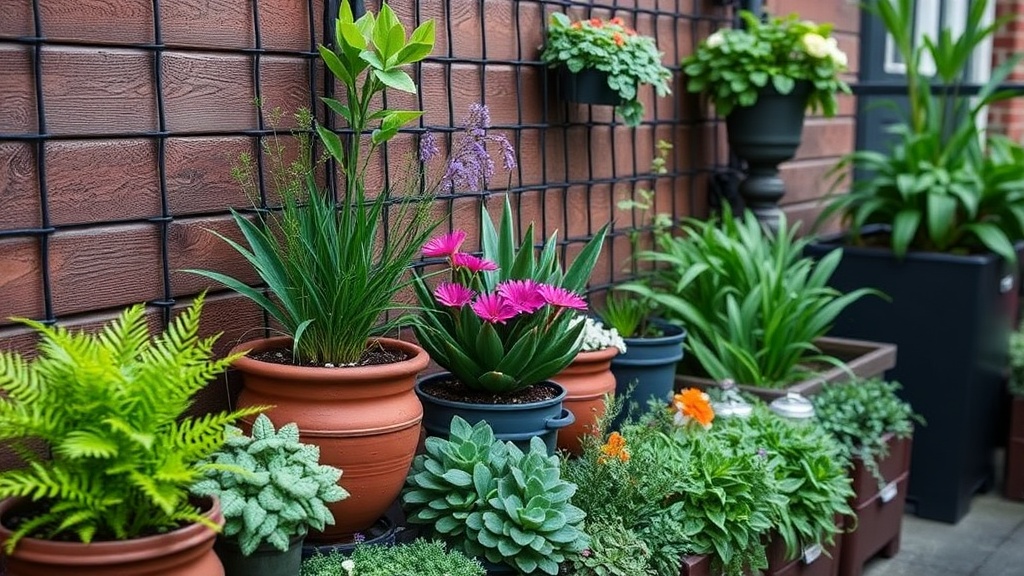
10 Creative Container Garden Ideas for Small Urban Spaces

Vertical Wall Planters
Hanging Basket Herb Garden
Repurposed Wooden Crate Containers
Self-Watering Patio Planters
Stacked Terra Cotta Tower Garden
Small urban spaces don't have to limit gardening ambitions. This post covers ten practical container garden setups that maximize limited square footage—balconies, patios, fire escapes, and tiny backyards. You'll find specific plant combinations, container recommendations, and maintenance strategies that actually work in cramped city environments. Whether dealing with concrete, shade, or strict landlord rules, these ideas transform overlooked corners into productive green spaces.
What Are the Best Containers for Urban Balcony Gardens?
The best containers for urban balconies combine durability, weight management, and proper drainage. Plastic and resin planters often outperform terracotta and ceramic in windy high-rise conditions—they're lighter, less likely to crack in freeze-thaw cycles, and easier to move when rearranging.
Here's the thing: not all plastics are equal. Look for UV-resistant polypropylene or high-density polyethylene (HDPE). The Bloem Terra Cotta Planter series offers the classic look without the weight—each 20-inch pot weighs under 3 pounds empty. For growing vegetables, consider fabric grow bags. The Root Pouch brand uses recycled plastic bottles mixed with natural fibers, creating breathable containers that prevent root circling and keep plants cooler in summer heat.
Worth noting: drainage holes matter more than container material. Drill additional holes if needed—stagnant water kills more container plants than any other factor. For wooden decks, protect surfaces with saucers or pot feet. The Emsco Group Greek Planter includes built-in drainage reservoirs, helpful for forgetful waterers.
How Do You Start a Vertical Garden in a Small Space?
Vertical gardens multiply growing area by using walls, railings, and hanging systems instead of floor space. The key is matching the system to your structure's weight-bearing capacity and sun exposure.
Wall-mounted pocket systems work well for herbs and leafy greens. The Woolly Pocket Living Wall Planter uses recycled plastic felt pockets that wick moisture evenly—no soil spills, no drainage mess. For heavier vegetables like tomatoes or peppers, install a sturdy trellis or espalier system. The Gronomics Vertical Garden Bed mounts securely to walls and includes integrated irrigation.
That said, renters need removable options. Over-the-rail planters transform balcony boundaries into growing space. The Hold It Mate Planter Box system clamps onto standard railings without tools or drilling—remove it when moving. Hanging baskets work too, but choose self-watering models like the Lechuza Classico Cottage to reduce daily maintenance.
Quick Setup Guide:
- Assess sun exposure—most edibles need 6+ hours
- Check weight limits—saturated soil weighs approximately 100 pounds per cubic foot
- Choose lightweight potting mix, never garden soil
- Install drip irrigation or self-watering reservoirs for vertical systems
- Start with trailing plants (strawberries, nasturtiums) and compact varieties
Can You Grow Vegetables in Containers on a Fire Escape?
Yes, vegetables grow well on fire escapes when using compact varieties, proper containers, and securing everything against wind. The limited space actually benefits some crops—tomatoes and peppers often produce better with root restriction, developing concentrated flavors.
Choose determinate (bush) tomato varieties like Bush Early Girl or Patio Princess—they top out at 2 feet rather than sprawling 6+ feet. For peppers, the Bonnie Plants Lunchbox series stays under 18 inches while producing full-sized fruit. Leafy greens offer the fastest returns: loose-leaf lettuce varieties like Salad Bowl and Black Seeded Simpson mature in 45 days and tolerate partial shade common in urban canyons.
The catch? Fire escape gardening carries legal considerations. Many municipalities prohibit blocking egress routes—keep pathways clear and containers secured. Use bungee cords or railing brackets to prevent toppling in gusts. (Chicago and New York residents should check local ordinances; some buildings explicitly ban fire escape plantings entirely.)
| Container Type | Best For | Weight (empty) | Wind Resistance |
|---|---|---|---|
| Fabric grow bags (5-gallon) | Tomatoes, peppers, eggplant | 0.5 lbs | High—flexible, won't tip |
| Self-watering plastic boxes | Lettuce, herbs, greens | 2-3 lbs | Medium—needs securing |
| railing planters | Strawberries, trailing herbs | 1-2 lbs | High—bracket-mounted |
| Stackable vertical systems | Herbs, small root vegetables | 3-5 lbs | Low—requires wall mounting |
Which Herbs Grow Best in Small Pots Indoors and Out?
Mediterranean herbs—thyme, rosemary, oregano, and sage—thrive in small pots because they prefer cramped root zones and drier soil conditions. These woody perennials tolerate neglect better than leafy annuals, making them ideal for beginners balancing busy urban schedules.
Basil presents more challenges indoors—it demands bright light and consistent moisture. The AeroGarden Harvest solves this with built-in LED grow lights and automated watering, producing continuous harvests from compact countertop units. For traditional pot culture, Genovese basil and Thai basil outperform large-leaf varieties in containers.
Here's the thing about mint: it belongs in containers even when ground space exists. This aggressive spreader takes over garden beds but behaves beautifully in pots. Try chocolate mint or pineapple mint for something beyond standard spearmint. Chives offer another low-maintenance option—established clumps produce for years with minimal attention.
For maximum harvest in minimum space, practice continuous cutting. Harvest basil by pinching above leaf nodes, encouraging bushier growth. Snip thyme and rosemary stems regularly— woody herbs left unpruned become leggy and sparse.
What Plants Work in Shaded Urban Courtyards?
Shaded urban courtyards support lush container gardens when selecting shade-tolerant species and managing moisture carefully. Hostas, ferns, and impatiens provide reliable color where sun-loving vegetables fail.
Edible options exist for low-light conditions too. Leafy greens—spinach, lettuce, arugula—actually prefer afternoon shade in hot climates, extending their harvest season before bolting. The Renee's Garden Salanova lettuce series produces dense, crunchy heads perfect for cutting. Asian greens like tatsoi and mizuna tolerate shade better than European vegetables.
For ornamental impact, consider the Heuchera (Coral Bells) family—varieties like 'Plum Pudding' and 'Lime Rickey' provide season-long color from foliage alone. Japanese painted ferns (Athyrium niponicum) add silver and burgundy tones to dark corners. These perennials return yearly, reducing long-term costs.
Worth noting: shade containers dry out slower than sun-exposed ones—adjust watering accordingly. Overwatering kills more shade container plants than underwatering. Check soil moisture 2 inches deep before adding water.
How Do You Build a Self-Watering Container System?
Self-watering containers use reservoir systems that separate water storage from soil, allowing plants to wick moisture as needed. These setups reduce watering frequency by 50-70%—a game-saver for urban gardeners with travel schedules or forgetful tendencies.
Commercial options include the EarthBox (the original, proven design) and City Pickers patio garden kits. Both include aeration screens, fill tubes, and overflow drains. For DIY construction, convert standard storage totes using pond baskets and perforated pipe—detailed instructions are available from University of Maryland Extension.
The science is straightforward: capillary action draws water upward through soil into the root zone. Plants access moisture continuously rather than experiencing wet-dry cycles. This steady supply improves yields—tomatoes grown in self-watering containers often produce 30% more fruit than traditional pots.
That said, self-watering systems require proper setup. Use quality potting mix—garden soil or dense mixes won't wick effectively. Fill reservoirs through the tube until water flows from overflow holes. In rainy climates, cover overflow holes during wet weeks to prevent waterlogged roots.
What Dwarf Fruit Trees Grow Well in Containers?
Dwarf citrus, figs, and selected apple varieties produce full-sized fruit on trees staying under 6 feet in containers. These permanent plantings transform patios into productive orchards—imagine stepping outside for fresh lemons or ripe figs.
The Meyer Lemon dominates container citrus for good reason—it's compact, nearly thornless, and produces fragrant flowers year-round. Four Winds Growers (available through Logee's Plants) offers well-established specimens grafted onto dwarfing rootstock. For colder climates, the Improved Brown Turkey Fig handles container life and survives winter dormancy in unheated garages or basements.
Apple enthusiasts should seek true genetic dwarfs—not just standard trees pruned small. The Ballerina 'Flamenco' grows as a single column, reaching 8 feet but staying under 2 feet wide—perfect for tight spaces. These require cross-pollination, so plant two compatible varieties or choose self-fertile 'Golden Sentinel.'
Container fruit trees demand specific care. Use large pots—15-20 gallons minimum for mature citrus. Potting mix must drain excellently; add 30% perlite or pumice to standard mixes. Fertilize regularly during growing seasons with formulations specific to fruit production—excess nitrogen produces leafy growth at the expense of fruit.
How Do You Protect Container Gardens from Urban Pests?
Urban container gardens face unique pest pressures—squirrels digging in pots, pigeons sampling greens, and aphids hitchhiking on nursery plants. Prevention works better than intervention once problems establish.
Physical barriers solve most mammal issues. Chicken wire laid over soil prevents squirrels from burying nuts (and digging up seedlings). For pigeons and sparrows, floating row covers like Garden Guard protect tender greens without blocking light. improved containers—wall-mounted or on sturdy stands—reduce slug and snail access.
Insect management requires vigilance. Inspect new plants thoroughly before introducing them to existing collections—aphids and spider mites spread rapidly in confined spaces. For organic control, Neem oil and insecticidal soap handle most soft-bodied pests. The Monterey B.t. (Bacillus thuringiensis) spray specifically targets caterpillars on brassicas without harming beneficial insects.
Worth noting: urban pollution affects plant health too. Rinse leafy greens before harvest—particulate matter from traffic settles on leaves. Position edible containers away from busy streets when possible, or focus on root vegetables and fruits with protective skins.
Can You Create a Pollinator-Friendly Container Garden?
Container gardens support bees, butterflies, and hummingbirds when including nectar-rich flowers alongside edibles. Even small balcony plantings contribute to urban pollinator corridors—connecting larger green spaces across city landscapes.
Choose single-flower varieties over doubles—the accessible nectar rewards pollinators more efficiently. Bee balm (Monarda) attracts hummingbirds with tubular red blooms. Lantana and Pentas draw butterflies all summer with continuous flowering. For native bee specialists, include California poppies (West Coast), purple coneflower (Midwest/East), or regional equivalents.
Herbs benefit pollinators too when allowed to flower. Cilantro flowers feed tiny native bees; basil blooms support honeybees late in the season. The trick is sacrificing some harvest—let 20% of herbs bolt and bloom. Parsley and dill specifically attract swallowtail butterfly caterpillars (those green "worms" are worth hosting).
Provide water sources—shallow dishes with pebble landing pads help thirsty insects. Avoid systemic insecticides entirely; these persist in plant tissues and poison visiting pollinators. The same practices protecting bees keep gardens safer for human consumption too.
What Are the Easiest Container Gardens for Beginners?
The easiest container gardens for beginners combine forgiving plants, simple maintenance routines, and quick visual rewards. Success builds confidence—start simple, then expand.
Option one: The salad bowl. Fill a 12-inch bowl with loose-leaf lettuce mix, radishes, and baby spinach. Harvest outer leaves continuously; new growth replaces cuttings. Most varieties mature in 30-45 days.
Option two: The herb trio. Plant rosemary, thyme, and oregano in one large container (they share water preferences). These Mediterranean perennials tolerate occasional neglect and provide kitchen harvests year-round.
Option three: The patio tomato. One determinate variety like Bush Goliath in a 5-gallon bucket with a cage. Water daily, feed weekly, harvest in 65 days. The visual impact—red fruit against green foliage—delivers immediate satisfaction.
That said, don't overthink container choice initially. Repurposed 5-gallon buckets (food-grade, with drainage holes drilled) outperform expensive ceramic pots. Drill holes, add gravel for drainage, fill with quality potting mix, and plant. The best container garden is the one you actually start.